Monday, July 2, 2018

Espiritu Sancto - Day 4


DAY FOUR
[Feb. 5, 2015]

We all slept in, and woke to a cloudless blue day.  Every shade of blue – dazzling, penetrating blue of the sky overhead; white, washed-out blue at the horizon; brilliant aqua and turquoise blue of the shallow waters near shore; midnight blues of the water deeper in the gulf.  This blue was broken only by a strip of bright white sandy beach along the big island to the north and the russet reds and oranges of the headlands stretching to the southwest.  We were at Isla Espiritu Sancto (Holy Spirit Island), anchored in the beautiful Bahia San Gabriel (Bay of St. Gabriel).  Along the edge of a mangrove lagoon tucked in along the shore, clouds of large, dark birds soared and squawked and swooped, silhouetted against the sky.  This is a protected Magnificent Frigatebird nesting colony.  Frigate birds are typically silent at sea, but sound like a loud party of blue jays during breeding season, which it is. 


After breakfast, Ran lowered the skiff and took me out for a closer look at these magnificent birds.  They cover every square inch of a man-made breakwater enclosing a small lagoon that was built for oyster farming in the late 1800s.   Apparently the French created many such oyster operations among these islands, using slave labor to farm and harvest mother-of-pearl.  The breakwater and stone foundation ruins, clearly visible on the low hillside, are all that remain. 
And the oysters.  Last week, exploring this bay with a boatload of guests, the naturalist brought back a large, luminescent oyster shell with two baby pearls attached.  It sits on the coffee service counter, next to the big bowl of always-available colorful fresh fruit, for guests to marvel and enjoy.

Anyway, Frigatebirds.  

From the skiff, I was able to dangle my toes into the crystal clear turquoise water, sure I could touch the white sand I could see clearly below, but Ran said the water was 4-5 feet deep.  Plus, there could be sting-rays buried in the sand – best to keep my toes out of it.  I was content to dangle.  The magnificent scissor-tailed birds were in the air by the hundreds, and still every possible perch was crowded.  These are land-based birds who are unable to take off from the surface of the water, and thus need a nearby spot of land to perch and rest.  They may snatch up their prey if a fish is swimming too near the surface, but generally subsist on piracy – stealing fish from other hunters, such as osprey, herons, pelicans, etc. – with an aerial attack, even going so far as to force their victims to disgorge their catch and then snapping it up in mid-air.  I think frigate ships were the type of vessel often used by pirates of the Caribbean – wonder if that’s how these birds got their name.  Or, perhaps the proud red throat that billows out from the males during mating season resembles a frigate’s sail.  Or both.


The young adolescents seemed to be practicing nest building, as they fly back and forth with bits of twig in their beaks.  The adult males are very obviously courting.  We set a little anchor and drifted, watching one couple in their courtship dance.  The male, puffing out his magnificent red throat sac, stretching up and down; and one close-by female, clearly interested, chattering her beak and swaying invitingly from one foot to the other.  There are several twig-top nests with one or two fluffy white chicks poking their heads out.  These all-white chicks will slowly gain their dark feathers, juveniles keeping a white head until the second year.

While Ran and I were bird watching, the chef and captain went for a swim and snorkel off the boat in the clear 72 degree water.  When we got back, they were both stretched out on the bow in the sunshine, getting warm and dry.

Heading northward, we sailed along the coast of Isla Espiritu Sancto, dotted with smaller outlying islands.  It is fascinating geography.  The island rock formations here are all ancient compressed ash from Miocene volcanic activity.  The resulting tuff resembles burnt umber sandstone, eroded into smooth, undulating waves that look like melted orange sherbet.  These are topped with low growing desert scrub creosote and an occasional cardon cactus, part of the surrounding Sonoran desert of the Baja.


The Baja peninsula itself was once attached to the mainland of Mexico but the western side of the San Andreas Fault began shifting, causing the peninsula to split off and drift north and west, away from the continent, sometime during the Pliocene era (3 million years ago, more or less).  The Pacific Ocean slowly filled in the resulting gulf, and the San Andreas Fault still runs down the center of the Sea of Cortez.

Saturday, November 14, 2015

The Port of La Paz - Day 2 & 3


DAY TWO
[Feb 3, 2015]
M/V Westward at Marina Cortez
Awoke aboard the M/V Westward, docked at the far pier in the gringo-oriented Marina Cortez, which anchors one end of the long, busy waterfront in the gulf city of LaPaz.  Everyone had chores to do, and I spent the morning getting familiar with the boat and cleaning and re-organizing the aft bar/coffee station.  It was actually a pleasure polishing all the gleaming, varnished mahogany. 


I had time for a long walk around the marina docks – many big, $$ American yachts – accompanied most of the way by a solitary eared grebe, who paddled affably alongside the dock for much of the way. 
At first I thought the poor thing had only one leg, I could see it pumping, up and down, behind its fluffy round body.  But then realized the other leg was tucked up –just for fun? – soon he was using both feet quite freely.
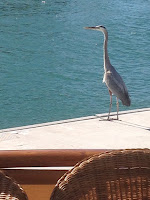
I finally decided to turn around on my walk when I came to the last long dock, uninhabited by boats but completely taken over by brown pelicans, arranged along both edges like a gauntlet, and one lone heron policing the far end. The planks of this entire section of the dock were covered in white guano.  So, no thanks, not today.  I walked back the way I had come, back to the boat to help stow the bags of clean guest sheets and towels which had just arrived from the local laundry folk.


DAY THREE
[Feb 4, 2015]
La Paz waterfront from the bow of the Westward

LaPaz is a warm, friendly town.  Obviously the main industry is tourism, as the waterfront seems to cater to gringos; many open-air gift shops, cafes and hotels face the big, wide harbor. 
Along the Malecon

Guests posing with a sculpture
The long, pedestrian park along the shore is populated with folks roller-blading, skate-boarding, walking their dogs, out for a stroll; it is lined with white benches and large, fanciful stone sculptures.  This boulevard is called the Malecon – a term meaning pier or wharf.  It is easy to imagine the busy waterfront when the harbor was dotted with Spanish trading ships and local fishing boats instead of white sailboats and mega-yachts.

The Malecon is sparkling, and clean, but once you take a side street away from the harbor, shops are tinier, denser, dirtier, many seem long abandoned.  Perhaps just unfortunate from the violent hurricane Odile that swept through the area only 5 months ago.   Spray-painted graffiti replaces the eye-catching colorful décor of the main street.

I went with chef Tracie to visit the bustling Mercada Brava, or “farmer’s market” on Brava Street, to help her re-provision with fresh produce and fish for the next guest trip.  She rode her bicycle from the marina to a nearby car-rental outfit, returned driving a little red hatchback, and off we went into town, with two blue and white coolers bouncing in the back.  The mercada is a large cement-adobe building, divided up into crowded little square stalls.  The vendors are mostly fishermen and farmers, but I notice a few women selling colorful ceramics and textiles as well. 

Tracie handed me one of her two huge, nylon shopping bags -- one for fish and one for vegetables – and proceeded to scope out the teeming pescado stalls.  She’s quick and decisive – ‘2 kilos por favor!’-‘Aqui, dos cientos, gracias!’ – loading my bag with fresh fillets, scallops, crabs, shrimp and a baby octopus.  Guess I’ll be trying pulpo for the first time, at some point in the next week or two!

The individual stalls are permanent, yellow tile-countered cubicles with boards and basins for cleaning piles of fish (fish heads 40 pesos per kilo) or butchering chickens or a side of beef, and various bins and hooks for all manner of display.  The cement floor was kept hosed down by a smiling brown-skinned man sporting flip-flops and a wide black mustache.  At one stall, two tiny women were baking corn tortillas, packaged to sell by the kilo.  The fruit and vegetable stalls were piled high with colorful and unpronounceable produce.  Tracie picked up a large black plastic tub from a nearby stack and began filling it with tomatoes, tomatillos, beans, onions, peppers, papayas, mangoes, melons, each carefully and swiftly examined.  When it was full, a warm-faced senor appeared, handed her an empty tub and, putting the full tub on his head, walked behind the counter to his senora, who weighed and packaged everything.  In this way they waited on 3 customers simultaneously, and kept everything straight.  Tracie filled 4 tubs, and was glad we only had 1 block to walk back to the car, as her big bag was very heavy. 

When her purchases were all stowed away back at the boat (amazing organization!), she, Bill and Randy hopped in the car again and went off to the Mexican equivalent of Home Depot or Kmart, on the outskirts of town, to pick up other necessaries for the trip.  As soon as Tracie finally returned from the car rental on her bicycle once again, the bike was stowed away on the upper deck near the skiff, and it was time to head out to sea. 
Sunset as we leave La Paz
Just as the sun was lowering to the horizon, the big engine started, we pivoted off the spring line into the current, cast off from the dock, pulled away and chugged out into the harbor.  The only ones around to see us off were the pelicans lined up on the dock.

We set anchor in a pleasant cove in the dark, a mast light from one lone sailboat as our neighbor.  With no guests aboard this week due to last minute cancellations, captain Bill plans to get much-needed repair work done while we’re underway, heading leisurely north to Loreto to meet up with next week’s guests. 


In the meantime, just the 4 of us crew aboard, it feels much like private-yachting in this exotic tropical setting.  And we’re all enjoying the luxury of staying in guest staterooms while the repair work is going on in crew-world -- ie: the crew’s bunk quarters down front in the fo’c’sle.

Tracie made us a warm bacon-dressing spinach salad topped with a fine filet of trout, and Bill put episode 4 of the Horatio Hornblower series into the VCR:  the big screen hides behind the tilt-up mirror built into the leaded glass bookcases above the fireplace mantel (yes, the boat has glorious teak paneling and a working fireplace in the main salon!)  We all lounged on the sofas, eating a delicious supper and watching TV.  Aaaah.  And then, secure in our cove with a well-planted anchor, the waves rocked us ever so gently to sleep.

Saturday, April 25, 2015

And now, about THE BOAT


The M/V WESTWARD was designed and built in the wild American northwest, near Seattle, WA, in the early 1900s.  Her lines were modeled after a salmon cannery tender, and she still exhibits the unique grace and elegance of that art-deco period of design, also a time when the notion of wilderness travel as a glamorous adventure was just getting started. She was literally built around her original 1923 Atlas engine, and launched in 1924 as the flagship of the Alaska Coast Hunting and Cruising Co. to pioneer hunting, fishing, and adventure travel in the remote regions of Washington, British Columbia and Alaska.

As a luxury cruising vessel, the M/V WESTWARD served a noteworthy clientele of hunters and fishermen for nearly twenty years. Distinguished guests included Bing Crosby, Walt Disney, George Eastman, A.C. Gilbert, E.F. Hutton and Marjorie Merriweather Post, Paul Mellon, Richard K. Mellon, Hal Roach, Rudolph Schilling, John Wayne, Dean Witter, and numerous other VIP’s of the era.  She was drafted to serve as a patrol boat off the coast of California during the Second World War, and then went on to cruise as a private yacht and charter vessel for twenty years, including a circumnavigation in the 1970s.  She returned to the Pacific Northwest in 1993, joining her "sister" ship the M/V CATALYST in a fleet dedicated to bringing adventure travelers into the wonders of southeast Alaska.  During the early 2000s she was again used for private yachting, until Captain Bill Bailey, still sailing the CATALYST in Alaska, once more re-united the WESTWARD with the CATALYST, and launched his adventure travels in the Sea of Cortez, Baja Mexico, in 2015.

And that's where we come in!  We have had the incredible opportunity to sail and work aboard the CATALYST with Bill in AK, and -- it's almost too amazing to be true!! -- now get to work aboard the WESTWARD in Mexico.  Never thought we'd be counted among the 'snow birds' who leave Vermont in winter, but spending those cold months in balmy latitudes, where you wear flip-flops everyday instead of knee-high snow boots -- well, we just might be hooked!

The WESTWARD has four double state-rooms with two shared heads (bathrooms), accommodating up to eight guests on the lower deck. The salon on the main deck is stunning, with teak paneling and leaded-glass bookcase above the fireplace mantel (true! a working fireplace!)  Full, stainless steel galley (kitchen), and dining area on the beautiful, enclosed aft deck.  Kayaks and skiffs travel up top, on the boat deck, where we also hang our laundry in the fresh breeze.  Yes, there is a little clothes washer tucked into the crew's quarters, below decks in the fo'c'sle -- which is all very tidy with gleaming white paint, varnished trim and fluffy rugs on the floors, and surprisingly roomy with 4 comfy bunks plus a small private captain's room with a desk and two more bunks.  Even our own head and full shower.  And of course the best roommates ever!


Guest relaxing in the gracious salon

Starboard Passageway

Aft Deck Dining

Chef Tracie's Galley


Captain Bill


BAJA! Here we come!

In 2012, Randy retired from twenty-five years in ministry in order to pursue his other loves for a time -- woodworking and wooden boats.  With God's amazing grace, he's been blessed in the most extraordinary way, connecting with the Pacific Catalyst adventure cruise business and crewing aboard their gorgeous antique vessel, the M/VCatalyst, in southeast Alaska. This winter (Jan-March) we had the wildest, most incredible adventure and opportunity to work aboard their second ship, the M/V Westward, cruising in the Sea of Cortez, Baja, Mexico.  [see http://www.pacificcatalyst.com/ ]
The following entries were written from the notes I (Carie) scribbled down during the six amazing weeks I was aboard as crew, serving guests on their 10-day trips of discovery and exploration!  Some of the entries are actually smooshed together from the experiences of different weeks, so that I can try to describe all the wonderful spots we visited without repeating, or trying to write all 40 days!!

DAY ONE
[Feb. 2, 2015]

Disorienting, official arrival in Mexico, after 3-mile long maze line through customs (OK, maybe slightly exaggerated…) at La Aeropuerto San Jose del Cabo, Baja California Sur.  Wow, it was so GOOD to see Randy and chef Tracie waiting for me just outside the door, backlit by the Mexican sunshine  :)  

I've missed him - he's been in Baja for a month already, while I've been keeping the fires going at home (well, figuratively anyway - we switched from wood to propane in our stoves this winter!)

Next, a bumpy 3-hour van ride through the mountainy Sonoran desert of the southern tip of Baja peninsula, finally arriving at the marina in La Paz weary and bleary.  It has been a long travel day.  I was sure happy to see and greet dear old friends aboard the M/V Westward, and enjoy the short walk as we all (Randy, me, Tracie and Captain Bill) traipsed into town at twilight for some two-for-one margaritas and tasty pescado frito at the local joint called Cayuga’s.  At first I ordered ‘pescadero’, trying to negotiate my way through the menu, but Tony, our waiter, was most polite and kindly let me know that I might prefer fried fish to fried fisherman :]    Tracie order the pescado entero, and was presented a crisply fried entire fresh snapper, enjoying every succulent bite including the eyeballs.  Mine was just the fillet, thanks. I think Randy and Bill had rellenos with smoked marlin.  I'm sure we all licked our fingers.

To get you oriented, here is where we are: 


Saturday, June 12, 2010

Homeward Bound... Petersburg to Juneau....

Homeward bound....

     Pulling up to the dock in Juneau this morning among the towering floating cruise cities was bittersweet for both of us. The familiarity now of Juneau felt strangely comforting;   "oh, yeah, we know where the library is, the hardware store, the restaurants to avoid, and which ones the locals go to..."  But the reality of leaving the Catalyst, crew and Alaska was...  tearful.

Here is the crew:

The decision was made that Randy will not finish out his anticipated season on the boat, but instead will return with me, to get his back and shoulder checked out.  Perhaps there is something that can be done to remedy whatever is the problem.  Which hasn't been getting better on its own.  It was a difficult decision, understandably.  This may also allow him some time to see his mom in Ohio who just entered a nursing home and apparently is rapidly showing signs of dementia.  And time to visit his sister Bev in Pittsburgh, before he resumes his duties and responsibilities back at the church in July as scheduled.  So, bittersweet.  Sad to leave such an amazing part of the world, which manages to get inside of one somehow; sad to prematurely leave his place on the boat;  and also glad to be getting home.

We flew from Juneau back to Seattle today, on to Boston tomorrow. Very strange to maneuver through busy crowds and traffic at the airport instead of maneuvering through ice -floes and rainforests. The earth still sways and rocks in that wonderful, soothing, familiar way.  Probably by tomorrow, or the next day, the earth will stand still again, and it will be us that moves along with the current of the business that seems to be inevitable in life.  We will be so joyful to see loved and cherished ones again.  It seems, for me, so much longer than just three-plus weeks in the wilderness.  And for Randy, it seems longer than two months.  We are not the same, either of us, as when we left home.  This changes one forever....


We hope to see you soon!!
Love,
Randy and Carie

Saturday, June 5, 2010

Heading south to Petersburg....


Saturday, June 5


I am sitting now in the Petersburg Public Library, the local wireless access. This is our first day of cool, steady rain, and the sun is already breaking through the clouds.  We have truly been blessed with beautiful weather.

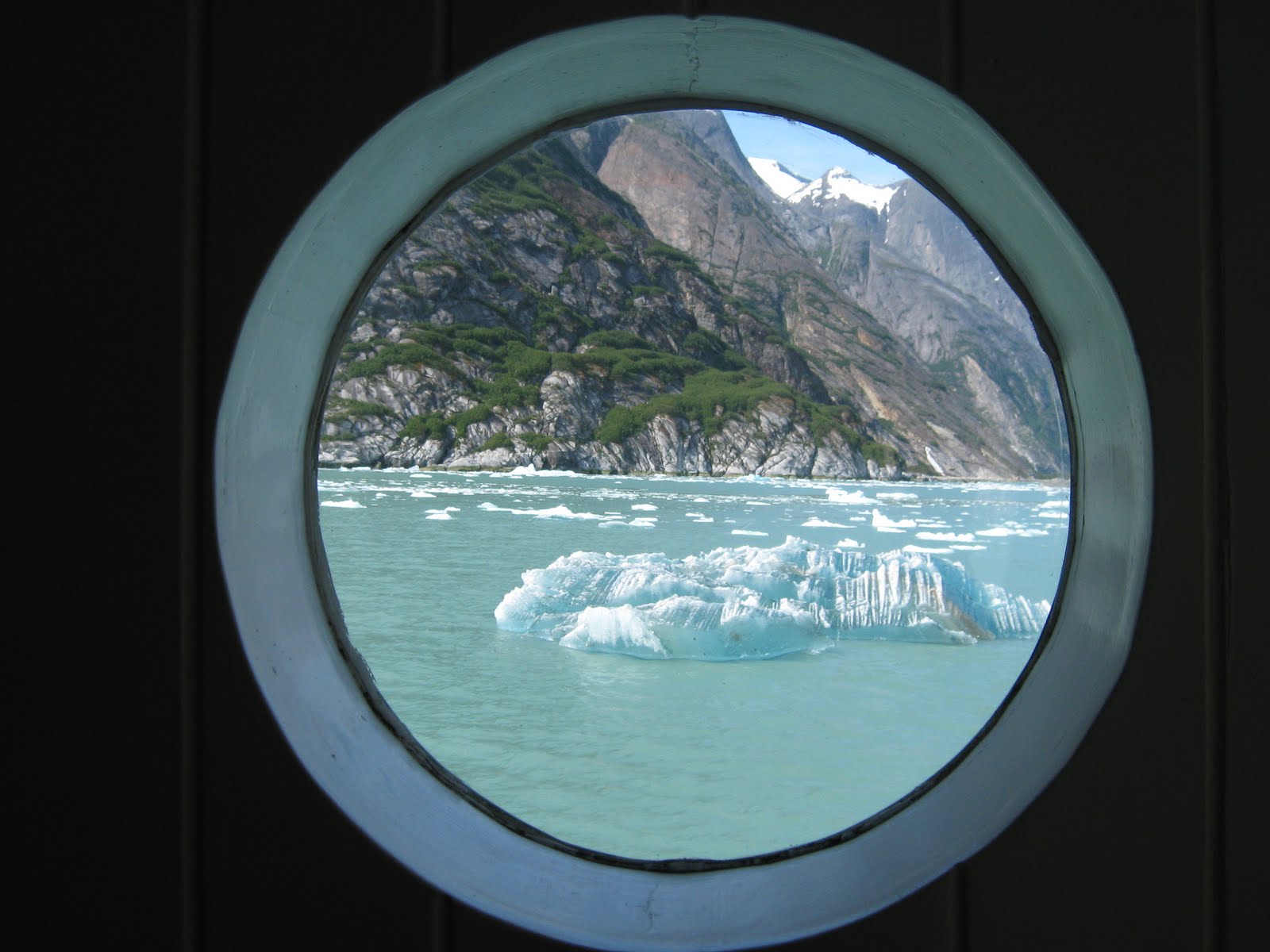
We left Juneau a week ago, and headed south through Stephens Passage and Frederick Sound.  Except for crew, all the passengers aboard were women, and we had a blast sharing new wilderness experiences together.  Randy was very busy with much mechanical work, but he found time to go on a couple of paddling and shore excursions with us.  It was a landscape entirely different than the high alpine peaks and barren ice fiords of Glacier Bay... We paddled with curious harbor seals in green fiords hemmed with sitka spruce; skiffed to the tilled moraine outwash of a grounded glacier and hiked on the glacier ice creeping down from the mountains; oohed and aahed at the cute seal pups lounging on turquoise blue icebergs floating out from the calving Dawes Glacier; kayaked past black bears browsing on sedges in a quiet cove, and saw WHALES!

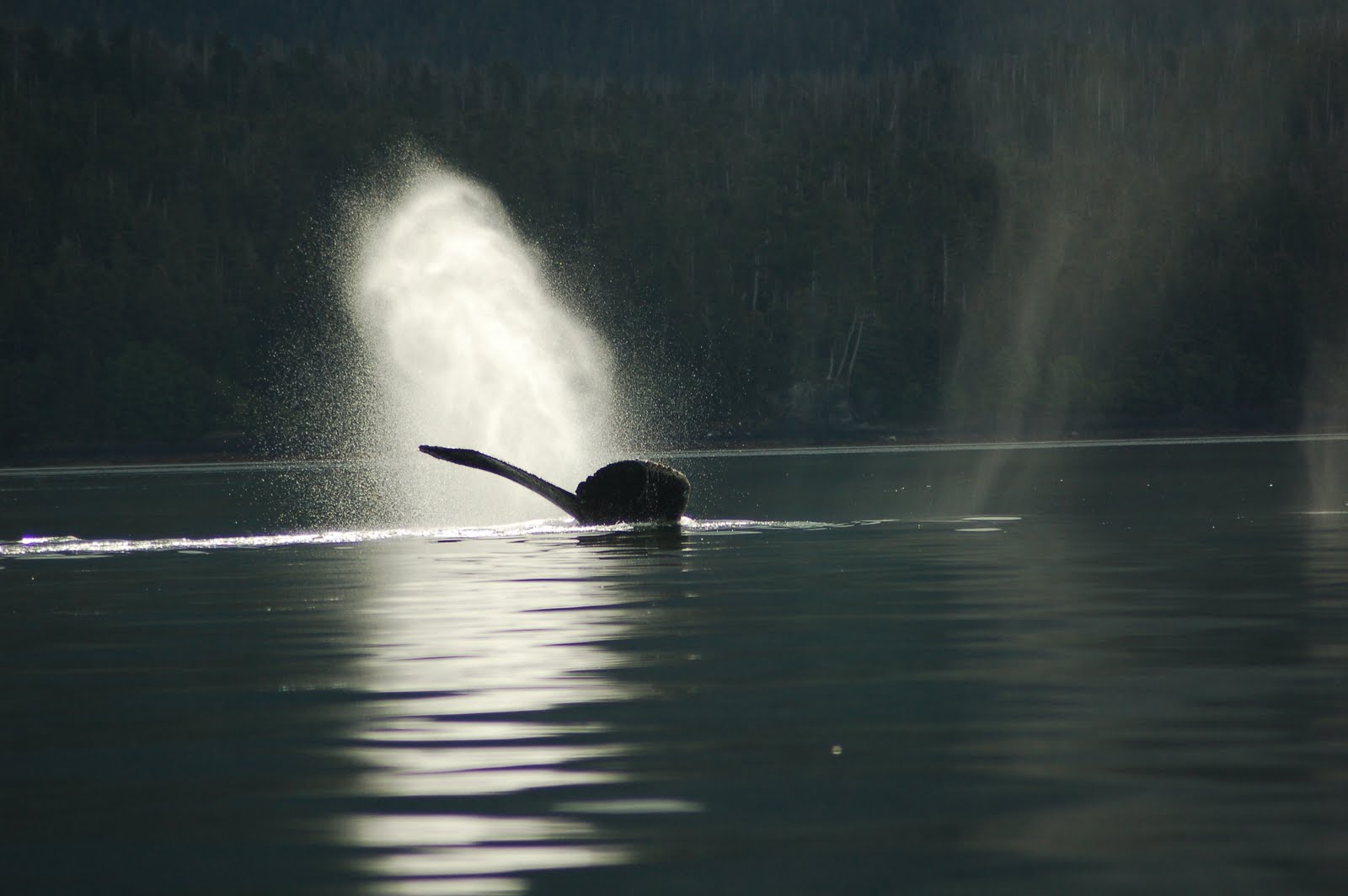
Near Brothers Islands, the currents from Stephens Passage, Frederick Sound and Chatham Strait all converge, providing a rich feeding ground for the large mammmals.  We spent two days in that part of the Inside Passage, and saw many, many humpback whales feeding, including the awesome spectacle of tail slamming and pec fin slapping.  Wow!  Randy took us out in the skiff, and we drifted (at a safe distance) among a family of four whales as they cruised the passage.  Here are just two of the hundreds of whale photos everyone took:


Stopping in the rainforest, on the way to a gorgeous waterfall:

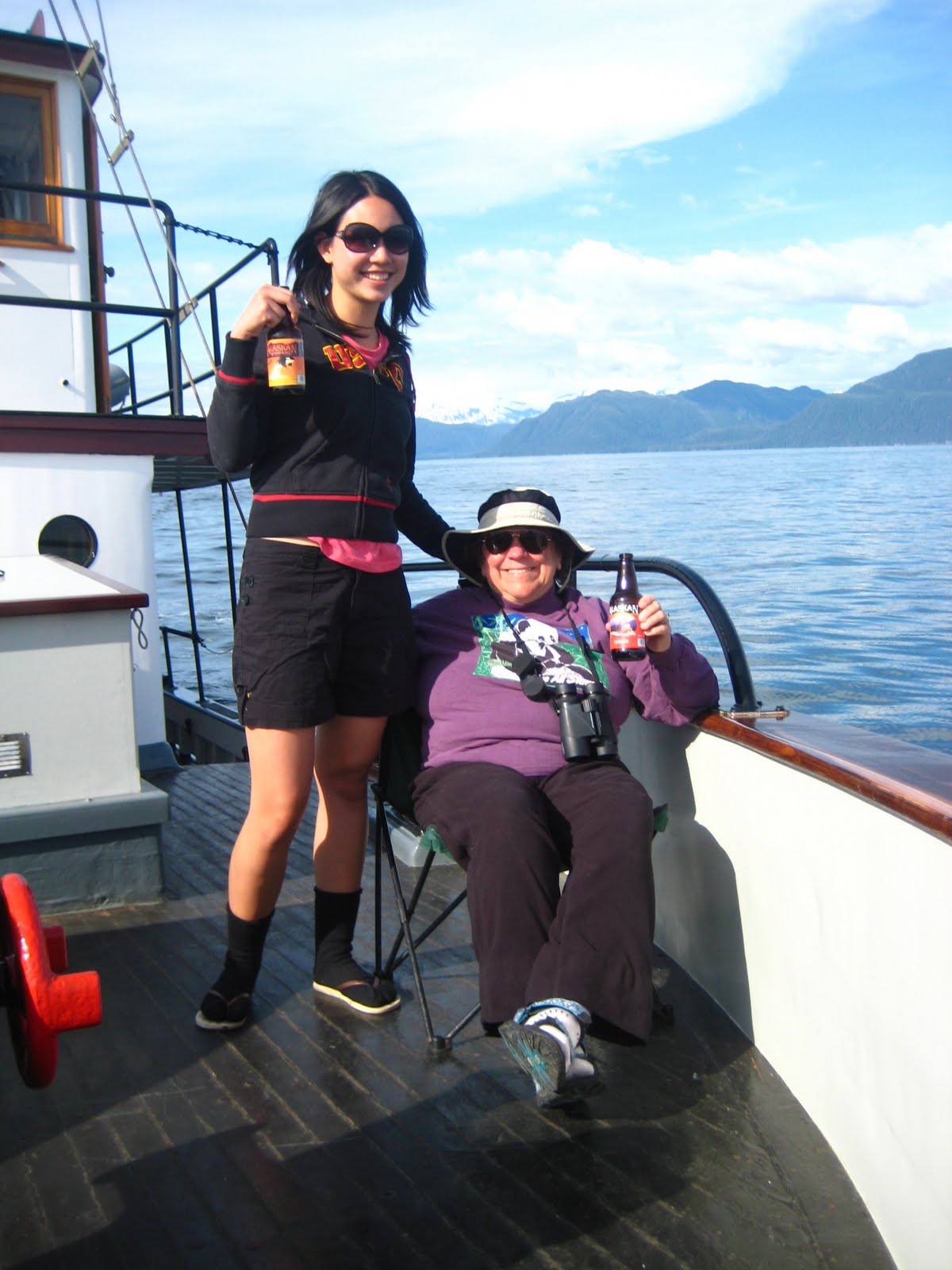
Fellow passengers:

Other wildlife:


At Dawes Glacier:

On Baird Glacier:


Anchorages: